
Branding Blog: Your Corporate Structure is Showing.
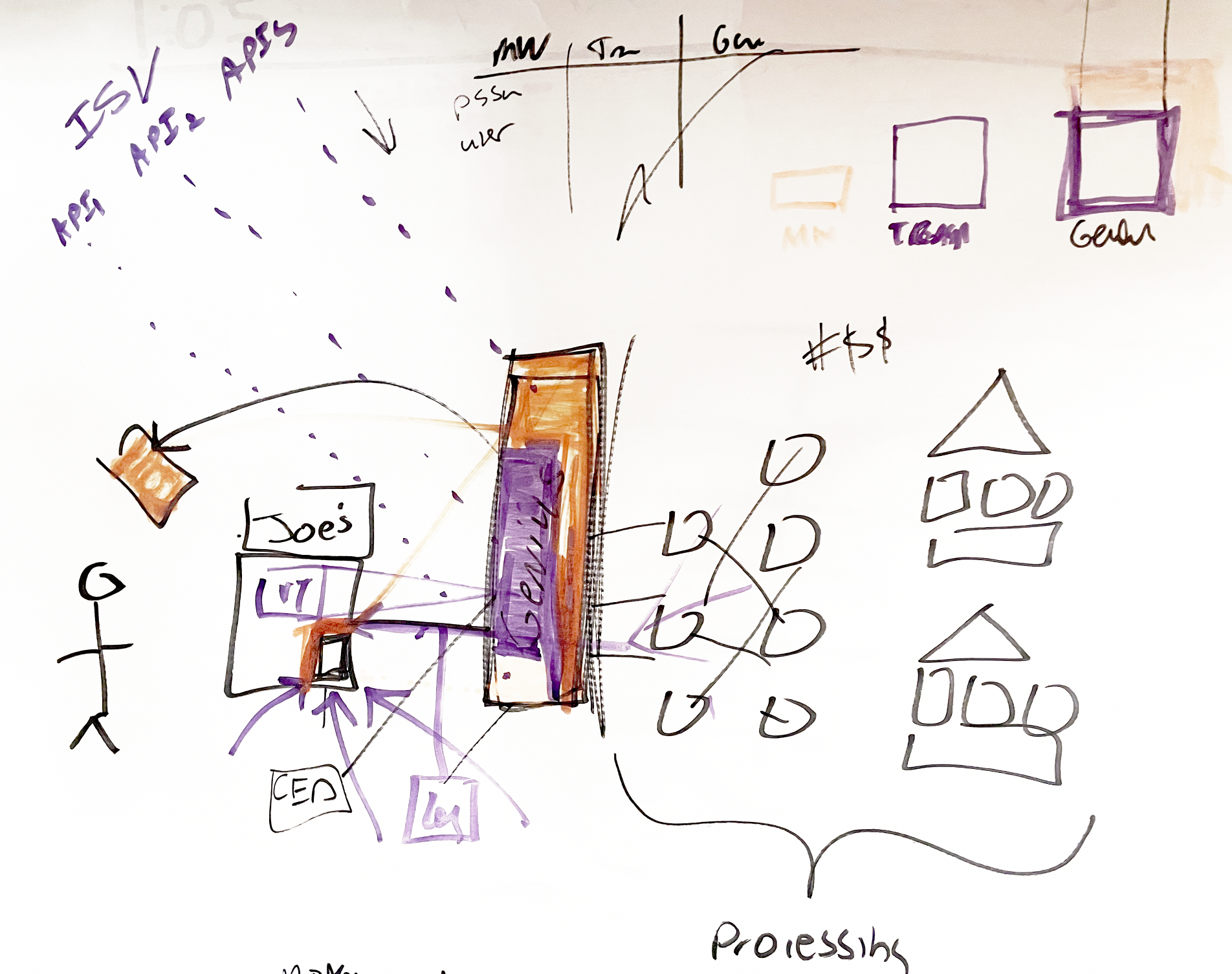
It’s a running joke around here: “your corporate structure is showing.”
It usually comes up when we’re looking at a website, capabilities presentation, or product portfolio, and are having a hard time understanding their offer. We find ourselves staring directly at the company’s org chart. Division A has its own section. Division B has its own language and naming conventions. Three products that do basically the same thing live in different places because they have different reporting structures. An acquisition from five years ago is still hanging off the side with its own logo, website and way of talking.
Customers Don’t Need to Know Your Org Chart
Companies need structure. There are strategic business units, departments, product teams, regions and reporting lines. Employees need to know who owns what. The trouble starts when those internal structures become the way they go to market and become customer-facing.
Suddenly, the website navigation is organized like… well, their org chart. Products are grouped by which business unit owns them instead of how customers actually want to shop. Before a customer can understand your offer or figure out how you can help them, you’re asking them to choose which division they’d like to talk to.
I don’t know. That’s why I came to the website. Your customers shouldn’t need an employee badge to figure out your offer.
It Makes Perfect Sense Internally
That’s part of what makes it hard to spot. When you live inside a company, the structure starts to feel natural. Product X belongs here. Product Y does something similar, but that sits under another group. Product Z came through an acquisition, so they have their own thing going on. Everybody inside the meeting room understands the history. Then you put all three in front of a customer and they ask a very reasonable question: What’s the difference? And why is it so complicated?
We run into this all the time in brand architecture and product line work. The portfolio often tells us more about how the company grew than how customers buy. You can see the acquisitions, the legacy businesses and the internal ownership. It becomes a kind of corporate archaeology. Interesting for us. But not particularly useful for the person trying to buy something.
Organize Around the Way People Buy
Websites are especially good at exposing this. A customer arrives with a need, while the company answers with a structure. They’re thinking, “I need something that can solve this problem.” The website gives them Enterprise Solutions, Specialty Products and Advanced Technologies. Okay. Where do I go?
Good brand architecture translates the complexity of the organization into something useful on the outside. That might mean organizing around an industry, an application, a use case or a need state. The question we like to ask is simple: if you knew nothing about how this company was organized, how would you naturally group these things? That answer is very different from the org chart. And this exercise usually is much easier when facilitated by an outside objective partner.
Hide the Wiring
There’s a reason restaurants don’t hand out a diagram of the kitchen before they give you their menu. There’s plenty of complexity back there. You just don’t need to understand any of it to order dinner.
Brands should work the same way. The customer doesn’t need to know which P&L owns the product or which team developed the service. They need to understand what you do, what’s right for them and why they should choose you. The organization can stay complicated. But your product line logic should be intuitive and support your value proposition. And in branding, it’s the first story you want your customer to understand. Without your org chart getting in the way.
So the next time your website, portfolio or presentation starts requiring an explanation of who reports to whom, take another look. Your corporate structure might be showing.
Let’s Talk Branding
617.350.5277 x25

Brand Strategy / Brand Architecture / Positioning / Product Line Logic
Naming / Research / Brand Identity / Packaging / Brand Guidelines